
VT Markets Singapore Review
Pros (What we like)
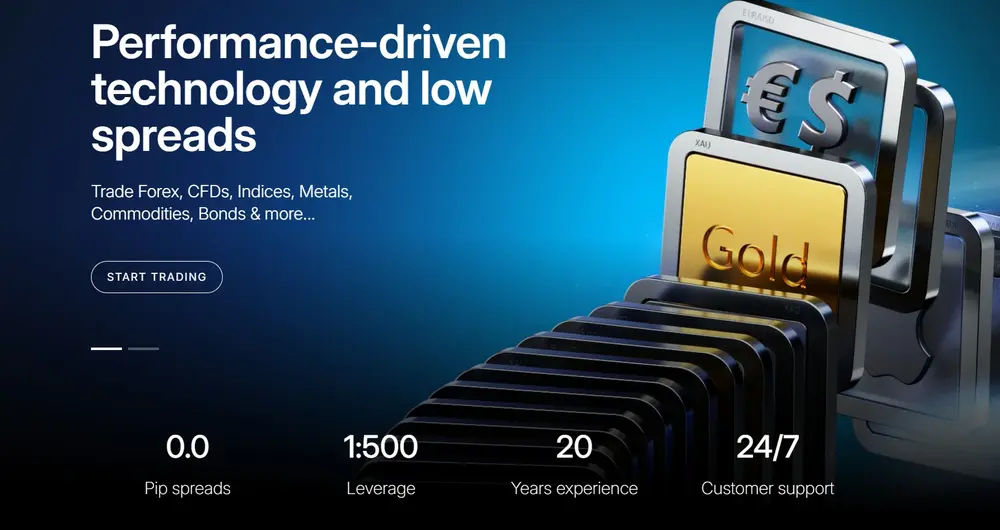
- ECN trading conditions with spreads from 0.0 pips on major currencies
- Strong regulatory oversight under ASIC for primary client accounts
- Excellent selection of indices and commodity CFDs
- Supports fast mobile app trading with built-in analytics
Cons (Drawbacks)
- Inactivity fees apply if the account is left dormant for over 6 months
- Educational center has limited materials for advanced setups
Overview: Peter's Honest Take
When you are looking to trade the global financial markets from a high-net-worth hub like Singapore, finding a broker that balances capital security with low transaction friction is the absolute first step. VT Markets has established itself as a major name in the retail trading landscape, operating since 2015 from its headquarters in Australia. In a market flooded with fly-by-night offshore brokers, VT Markets presents a regulated profile that appeals to traders who refuse to take unnecessary counterparty risks.
However, trading in Singapore introduces specific local challenges. We face strict leverage limits imposed by the Monetary Authority of Singapore (MAS), unique income tax criteria set by the Inland Revenue Authority of Singapore (IRAS), and payment routing complexities. This audit covers the realities of trading with VT Markets as a Singapore resident, focusing on real-money execution, regulatory licensing, account types, and how the broker handles deposits and withdrawals through local bank channels.
Retail traders often ignore that spreads and execution latency are not just stats on a website—they are the primary determinants of whether your trading strategy is profitable or drains your account. Standard market-maker accounts mark up spreads to build in their profit margins, while raw spreads directly connect your terminal to institutional liquidity providers. We will analyze how VT Markets performs in execution speeds, spread costs, and whether their platforms hold up under live market conditions.
Is VT Markets Legal in Singapore?
The first question any cautious trader in Singapore must ask is whether a broker is legal. To clarify: yes, it is 100% legal for individual retail traders in Singapore to open an account, deposit funds, and trade forex with VT Markets. Under the Singapore Securities and Futures Act (SFA), there are no laws prohibiting individuals from trading currency derivatives or CFDs with offshore or international brokers.
However, there is a major regulatory caveat that you must understand. VT Markets does not hold a Capital Markets Services (CMS) license from the Monetary Authority of Singapore (MAS). Under MAS regulations, any broker that actively solicits Singapore residents or advertises inside the country must hold a CMS license. Because VT Markets does not hold this license, they cannot physically market their services to Singaporeans. This is why you will not see advertisements for VT Markets on local MRT lines or Singapore financial websites.
What does this mean for your capital? Because the broker is not locally regulated, you do not have access to local customer protection schemes. If you encounter a dispute regarding order execution, slippage, or withdrawal delays, you cannot file a case with the Financial Industry Disputes Resolution Centre (FIDReC) in Singapore. You are entirely dependent on the regulatory protections of the jurisdiction where your account is opened—such as ASIC, FSC. If the broker fails or performs predatory actions, the MAS cannot assist you. Your capital safety depends entirely on the strength of their tier-1 regulation offshore, making it vital to verify which entity you are registered with.
Despite the lack of MAS licensing, many experienced Singaporean traders choose to register with VT Markets to escape the strict local leverage limits. The MAS protects retail traders by restricting leverage to a maximum of 1:20. While this prevents rapid account destruction, it also limits trading flexibility for disciplined capital managers. By choosing an offshore licensed entity under a global brand like VT Markets, traders can access wider leverage structures while still relying on the brand's global regulatory reputation.
Does VT Markets Accept Singapore Traders?
Yes, VT Markets actively accepts and onboards retail traders residing in Singapore. Because they do not hold a local MAS license, they cannot actively recruit you, but they are fully permitted to register your account if you approach them voluntarily (known as reverse solicitation).
When registering from Singapore, your account will typically be onboarded under the VT Markets LLC (SVG) entity. This is an important detail because it determines your leverage limits and legal protections. Under local MAS rules, retail leverage in Singapore is strictly capped at 1:20. However, because you are onboarding with their international entity, you are permitted to access higher leverage options up to 1:500.
The Know-Your-Customer (KYC) onboarding process for Singapore accounts is highly structured to prevent money laundering and fraud. To complete your registration, you must provide two primary documents:
- Proof of Identity: A clear scan of your Singapore NRIC (front and back) or your passport. The details must match your registration name exactly.
- Proof of Address: A utility bill, local bank statement, or telecom bill showing your full name and residential address. The document must be dated within the last 6 months. Singpass screenshots are sometimes accepted, but standard PDF statements from local banks like DBS, OCBC, or UOB are the fastest way to get approved.
Once these documents are uploaded, the compliance team typically approves the account within 12 to 24 hours, giving you access to the trading portals and deposit gateways. It is critical to ensure that your scans are high-resolution and that no borders of the document are cropped. The compliance team of tier-1 brokers is highly strict and will reject any blurred or incomplete address proofs.
Types of Accounts Offered by VT Markets
To accommodate different trading styles, commission profiles, and capital constraints, VT Markets offers multiple account structures. Choosing the correct account type is vital to keeping your transaction costs low and matching your execution requirements.
Standard STP Account
No commission charges, variable spreads, and instant STP routing. Settle your trades straight in standard contracts.
- Minimum Deposit:$100
- Typical Spreads:From 1.2 pips
- Commission Fee:Zero
Raw ECN Account
Direct institutional pricing. Highly recommended for automated EAs, scalpers, and active day traders in Singapore.
- Minimum Deposit:$100
- Typical Spreads:From 0.0 pips
- Commission Fee:$3.00 per lot per side
For most day traders and high-frequency scalpers, the raw spread or ECN account structures are by far the most cost-effective. While paying a commission sounds less attractive on the surface, standard accounts with wider markups will cost you significantly more in the long run. If you are swing trading or holding positions for several days, the standard account might be acceptable, but active intraday setups require raw pricing.
It is also worth noting that VT Markets supports Islamic (swap-free) accounts for Muslim traders in Singapore. Swap-free status removes all overnight rollover interest charges, replacing them with a flat administration fee if a position is held past a specific number of days. If you qualify, you can request swap-free activation directly through the client portal after completing your KYC verification.
Spreads, Commissions, & Hidden Transaction Costs
In retail trading, transaction costs are the primary silent killer of account equity. You must understand how VT Markets charges you for every trade. The cost structure consists of three main elements: spreads, commission fees, and swap rates.
On standard accounts, spreads start at From 0.0 pips (Raw ECN). This spread is variable and will widen during major news releases, such as US Non-Farm Payrolls (NFP) or interest rate decisions by the FOMC. On ECN or raw spread accounts, the spread is straight from liquidity providers, often sitting at 0.0 pips during the liquid London and New York session overlaps, but you pay a flat commission of around $3.00 to $3.50 per standard lot traded per side.
If you hold trades overnight, you will be subject to overnight financing costs, known as swap fees. Swaps are calculated based on the interest rate differentials between the two currencies in the pair. Depending on whether you are long or short, you will either pay a fee or receive a small credit. Note that VT Markets charges triple swap rates on Wednesday nights to cover the weekend settlement period.
Additionally, you must account for inactivity fees. VT Markets charges Charged after 6 months of dormant status. If you are a seasonal trader who takes long breaks from the market, it is critical to withdraw your remaining balance to a local bank account to prevent this fee from slowly draining your capital.
Trading Platforms & Execution Latency
VT Markets provides access to standard trading interfaces including MT4, MT5, and sometimes third-party integrations like TradingView or cTrader.
The broker utilizes high-speed execution routing with servers situated in major financial data hubs like Equinix NY4 (New York) hosting, low latency of ~15ms. For Singapore traders, this physical distance means there is a natural network transit delay (ping) of approximately 180ms to 240ms to London or New York. If you are running high-frequency scalping algorithms or automated EAs, you should consider renting a Virtual Private Server (VPS) located in London or New York to reduce your execution latency to less than 2ms, protecting your orders from slippage during fast market movements.
The choice between platform versions is also highly operational. MT4 remains the industry standard for custom script execution, but MT5 offers superior multi-threaded testing capabilities, a built-in economic calendar, and native depth-of-market (DOM) routing features. If your strategy relies on tracking institutional order blocks or trading exchange-cleared assets, MT5 is the logical upgrade path.
Singapore Banking: Deposits & Withdrawals
Managing your payment routes is a critical operational aspect of trading. VT Markets supports multiple funding channels, including FAST transfer, credit cards, Skrill, Neteller, bank wire.
For Singapore residents, the availability of FAST bank transfer is a major benefit. It allows you to transfer SGD directly from your DBS, UOB, or OCBC account, with the funds clearing into your trading wallet almost instantly. This removes the need for international wire transfers, which can cost $30 to $50 SGD in intermediary bank fees and take up to five business days to clear.
Withdrawals must be processed back to the exact same channel used to deposit due to strict anti-money laundering (AML) laws. Withdrawals typically take 1-2 business days back to local bank account to settle back into your local bank account. There are no direct withdrawal fees charged by the broker, but you must check if your local bank charges incoming wire processing fees.
We advise keeping a separate bank account dedicated entirely to your trading deposits and withdrawals. This makes tracking your trading capital flows straightforward and simplifies the process of filing your tax statements at the end of the financial year.
Peter's Verdict
VT Markets represents a stable, highly regulated platform that offers competitive trading environments for Singapore retail traders. While the lack of direct MAS regulation means you must be comfortable onboarding with their international entity, their regulatory track record under ASIC, FSC provides solid capital safety.
If you are an active day trader, opt for the raw spread/ECN account configurations to avoid spread markup drag. Always implement strict risk management protocols, limit your leverage exposure, and start with a demo account to test execution speeds before depositing live risk capital.
Ultimately, retail trading is a marathon, not a sprint. Success depends on selecting a broker that operates with high execution integrity, keeping transaction costs low, and maintaining strict personal discipline. VT Markets provides the technical infrastructure to succeed, but managing capital risk remains your absolute responsibility.
High-Risk Alert (YMYL Compliance)
Forex and CFD trading involves significant leverage, which can amplify both profits and losses. Between 74% and 89% of retail investor accounts lose money when trading foreign exchange. Ensure you fully understand the mechanics of leverage and market volatility before committing capital.
Editorial Transparency & Bias Check
Our team tests brokers using real money accounts to measure actual spreads, transaction friction, and deposit speeds. Broker ratings are calculated algorithmically based on spreads, regulation, customer service, and ease of withdrawals. We refuse payment in exchange for positive reviews. Unregulated brokers are marked clearly with risk warnings.
Written by PeterVERIFIED TRADER
Professional Retail Trader & Editor
Trading Forex, Gold (XAUUSD), and indices since 2012. Survived three margin calls and spread widenings so you don't have to. Peter reviews platforms based on actual deposit testing, spreads audit, and latency check.